News analysis ·
Piermont on fintech reserves: who absorbs the shortfall
Piermont Bank's CEO told Banking Dive how a partner bank polices fintech reserves. We trace the money flow and who takes the loss when a fintech fails.
Wendy Cai-Lee, who founded and runs New York-based Piermont Bank, used an interview with Banking Dive at Money20/20 in Las Vegas to describe how her bank keeps fintech partners in line. Her most candid point was about reserves: the contract lets the bank act when a fintech falls short, but acting is hard. This article explains how money moves in a partner bank setup, and who carries the loss when a fintech cannot pay.
What Piermont's CEO said
Piermont is a digital commercial lender with $505 million in assets, founded in 2019. It wants to become an embedded banking provider, which means a bank whose accounts, cards and loans sit inside other companies' apps. Its product list includes for benefit of (FBO) accounts, card issuing and embedded loans.
Cai-Lee told Banking Dive that fintech clients get the same treatment as large loan customers. That means due diligence before signing, careful onboarding and continuing monitoring, all kept inside the bank's risk appetite, the level of risk its board is willing to accept. She also prefers banking deeply in fewer sectors, warning that many small niches add an overlooked industry risk.
Last week Piermont announced deals with BlxckPay, which links employer accounts to worker payroll cards, including for seasonal farm crews, and with MassPay, which pairs payment rails and settlement with global payouts.
How the money moves in a partner bank setup
A fintech app is usually not a bank. To hold customer money or issue cards, it partners with a chartered bank. The customer sees the fintech's brand, but the dollars sit at the bank.
The common structure is an FBO account. The bank opens a single pooled account in the fintech's name, held for the benefit of the fintech's end users. The fintech keeps its own ledger that says which user owns which slice of the pool. When a user pays a bill or loads a payroll card, the bank moves the money on its rails, and the fintech updates its ledger.
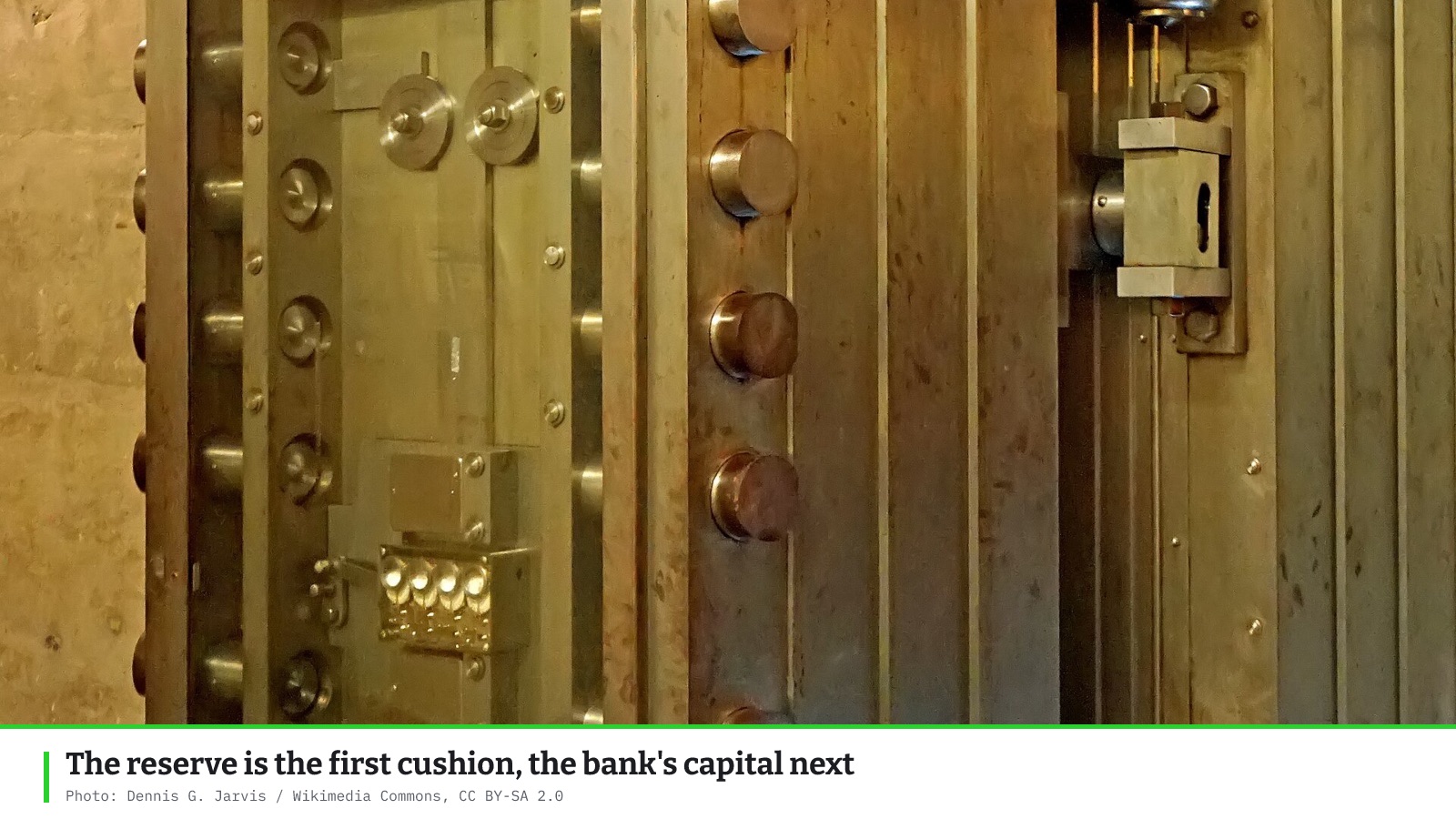
On top of this sits a reserve. The fintech agrees to keep a cushion of its own money at the bank. If card transactions are disputed, payouts go out before funds arrive, or fraud slips through, the bank draws on that cushion first. When the cushion drops below the agreed level, the fintech must top it up.
- End user: holds a claim recorded on the fintech's ledger.
- Fintech: runs the app, the ledger and the reserve.
- Partner bank: holds the pooled money, moves it, and answers to regulators.
Who carries the loss when a reserve runs dry
This is the gap Cai-Lee described. Picture a large client that misses a reserve top-up. The bank's contract gives it the right to pause that client, but pausing could freeze payroll cards or payouts for the client's end users and strain the relationship. "For us, contractually, the bank reserves the right to pause. But can you really pause your client? That's tough."
In general terms, while a shortfall stays open, the bank's own capital is the backstop, and losses the reserve does not cover land on the bank's books. End users face a different risk: if the fintech's ledger is wrong or incomplete, it can be hard to prove who owns what inside a pooled account, and payouts can be delayed while records are rebuilt.
Piermont's experience with Parker shows the other lever: saying no up front. Piermont ran Parker's FBO banking product, while Patriot Bank handled its commercial credit card. Parker went bankrupt this year. Cai-Lee said Piermont lost no money because it declined the parts of Parker's business it was uneasy with, and Parker took those to other banks. Declining a business line does not remove the risk from the system. It moves it to whichever bank accepts it.
Rules, examiners and the charter question
The bank is the regulated party here. In 2024 Piermont agreed to an FDIC consent order covering alleged weaknesses in its banking-as-a-service business. A consent order is a formal agreement to fix problems under supervision. Cai-Lee said the bank never considered leaving that business. FDIC data cited by Banking Dive show Piermont lost $5 million in the first half of this year, after losses of $4.6 million in 2025 and $5.3 million in 2024.
Some fintechs now want to skip the partner bank altogether. Banking Dive reported that fintechs and nonbanks have sought national bank, trust and industrial loan company charters as regulators signal openness. Cai-Lee's caution: getting a charter is not the same as earning a good CAMELS rating, the exam score that grades a bank's capital, the quality of its assets, its management, its earnings, its liquidity and how exposed it is to market swings. She noted that the staff who approve charters are separate from the risk examiners who come later.
What to watch
Watch how new charter holders fare in their first safety and soundness exams; Cai-Lee said that will become clear over the next year or two. Watch whether partner banks write stricter reserve terms, and whether they actually enforce them against large clients. And watch the role of AI: Cai-Lee said it may let banks rely less on some fintech services, pushing fintechs to offer more value as partners.
Sources
- Banking Dive, 27 Oct 2026
Written by AI from the sources above and published automatically: before release, a script confirms every figure against the sources and checks for copied text. No editor reviews it. Treat it as background reading, not financial advice.