News analysis ·
OneMain's ILC Charter: Who Carries the Lending Risk
The FDIC approved OneMain's industrial bank charter. We trace how insured deposits would fund subprime loans and who absorbs losses if borrowers default.
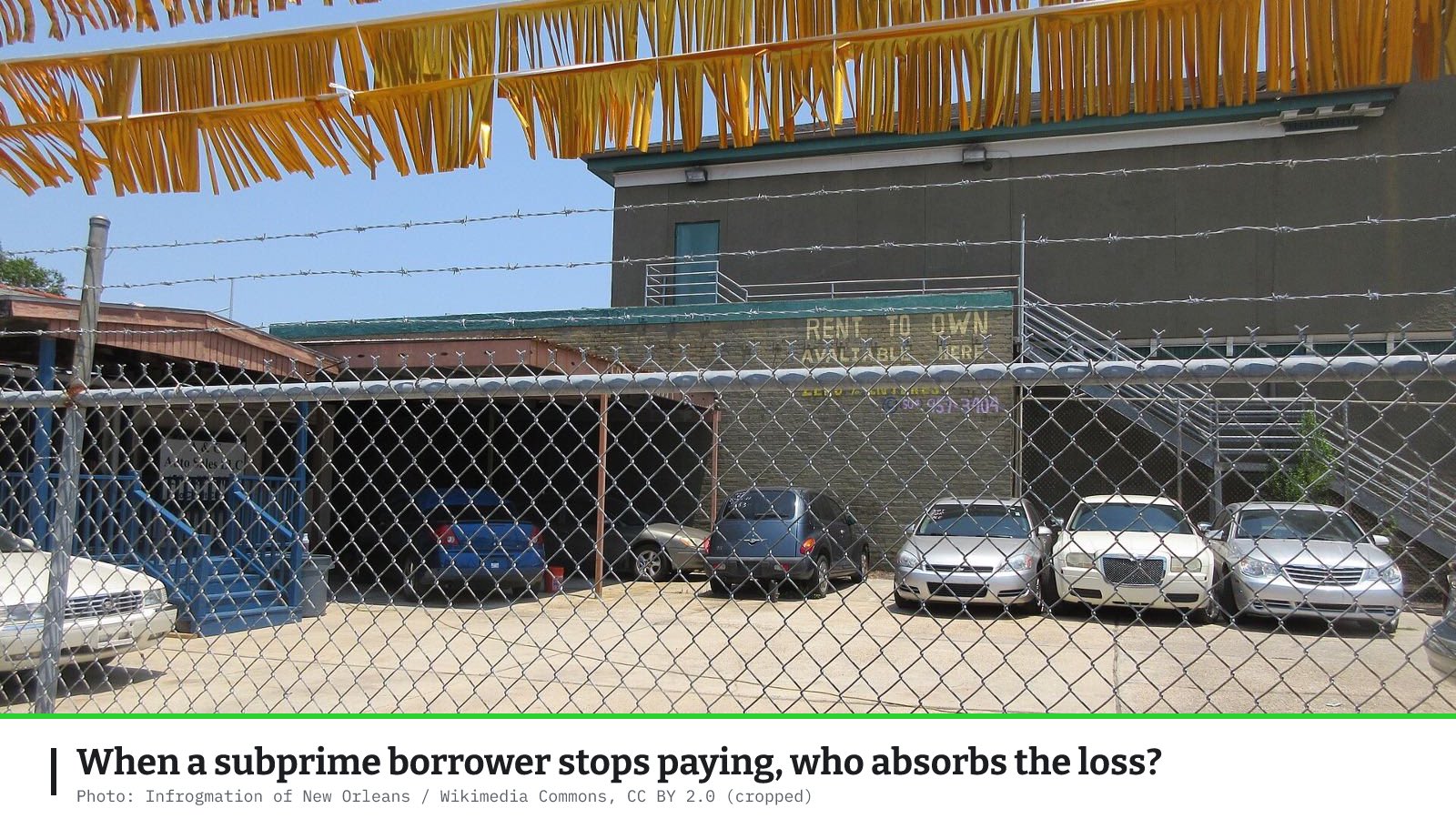
The FDIC has approved an industrial loan company charter for OneMain, a lender that makes installment loans to subprime borrowers, Banking Dive reported. The decision lets a consumer finance company build a bank inside its group. This article looks at what changes in how OneMain's lending is funded, and who stands behind the money if loans go bad.
What the FDIC approved
An industrial loan company, or ILC, is a state-chartered bank that can take insured deposits and make loans, but whose parent does not have to be a bank holding company. OneMain applied for one in March 2025, and Banking Dive reported that opposition started almost at once. OneMain says Utah's state banking regulator approved the plan too, and the company expects the bank to open in roughly one year.
The approval comes with conditions. The new bank must start with at least $341 million in capital and keep a leverage ratio of 15% or higher. A leverage ratio compares a bank's own capital with its total assets, so a high floor means more of the bank's money, not depositors' money, sits in front of losses. CEO Doug Shulman said the bank would make OneMain's financial foundation stronger and more resilient and help it serve more customers.
How the money moves today and after the charter
A non-bank lender pays for its loans with money it raises from investors and lenders: equity, corporate debt, credit lines or securitisations. That funding is usually more expensive, and investors price in the risk of the loan book. When the borrower repays, the cash flows back to those funders.
A bank can instead fund loans with deposits. Deposits up to the insurance limit are backed by the FDIC's Deposit Insurance Fund, which banks pay into. That backing is why savers accept lower rates. The National Community Reinvestment Coalition made this point directly in its June 2025 letter: "An ILC charter would allow OneMain to fund its lending operations with lower-cost, insured deposits instead of more expensive commercial funding or equity". In its view, that swap changes OneMain's risk profile.
The FDIC's description of the plan shows which deposits matter. The bank will focus on personal loans, auto finance and credit cards, and part of that personal lending will carry no collateral. Brokered deposits will fund the credit cards, and the bank will hold only a nominal amount of retail savings deposits. Brokered deposits are placed by intermediaries who shop for rates on behalf of many savers. They can be gathered quickly, but they can also leave quickly when a better rate appears elsewhere.
Who bears the losses if borrowers default
Follow a bad loan through the new structure. When a subprime borrower stops paying, the first loss hits the bank's earnings and then its capital. This is the layer the FDIC's capital minimum and leverage floor are meant to thicken. Only if losses ran through that capital would insured depositors be at risk, and at that point the Deposit Insurance Fund pays them, not OneMain's shareholders.
That is the core of the critics' case. NCRC warned that nonprime borrowers are more likely to default in periods of economic stress, which raises safety and soundness questions. Some lawmakers and trade groups add a second concern: an ILC's parent avoids Federal Reserve supervision. In May, the community bank trade group ICBA said this leaves a gap in oversight and adds systemic risk. Supporters see it differently. FDIC head Travis Hill described ILCs in early 2025 as a route for new entrants into banking, and applications have risen under the second Trump administration.
- Borrowers: carry the cost of the loan and any add-on products sold with it.
- OneMain's capital: absorbs credit losses first, under the FDIC's capital conditions.
- Insured depositors: protected up to the limit, with the Deposit Insurance Fund as backstop.
- Other banks: fund the insurance pool through their premiums.
Conduct history and the FDIC's warning
Consumer protection is the other open question. In 2023 the CFPB ordered OneMain to pay $20 million over claims that it misled customers into buying add-on products to get loans. Later, 13 state attorneys general sued, alleging that subprime borrowers were steered into credit insurance and other costly extras without understanding the cost. The FDIC warned that the bank must follow the CFPB order if it finances optional add-ons, or face further action.
The FDIC will also require a Community Reinvestment Act strategic plan suited to the business. NCRC had flagged a mismatch: a Utah bank lending nationwide could otherwise focus its reinvestment duties only on Utah.
What to watch
The next markers are practical. Watch whether the bank opens on the timeline OneMain gave, how much of its funding comes from brokered deposits, and how the CRA plan and the add-on product rules are applied in practice. Each of these shows how much of the lending risk stays with OneMain's own capital and how much leans on the insured deposit system.
Sources
- Banking Dive, 18 Nov 2026
Written by AI from the sources above and published automatically: before release, a script confirms every figure against the sources and checks for copied text. No editor reviews it. Treat it as background reading, not financial advice.