News analysis ·
Who Bears the Risk When AI Agents Shop
AI shopping bots are spending money before liability rules exist. Banks, card networks, and tech platforms disagree on who covers the loss.
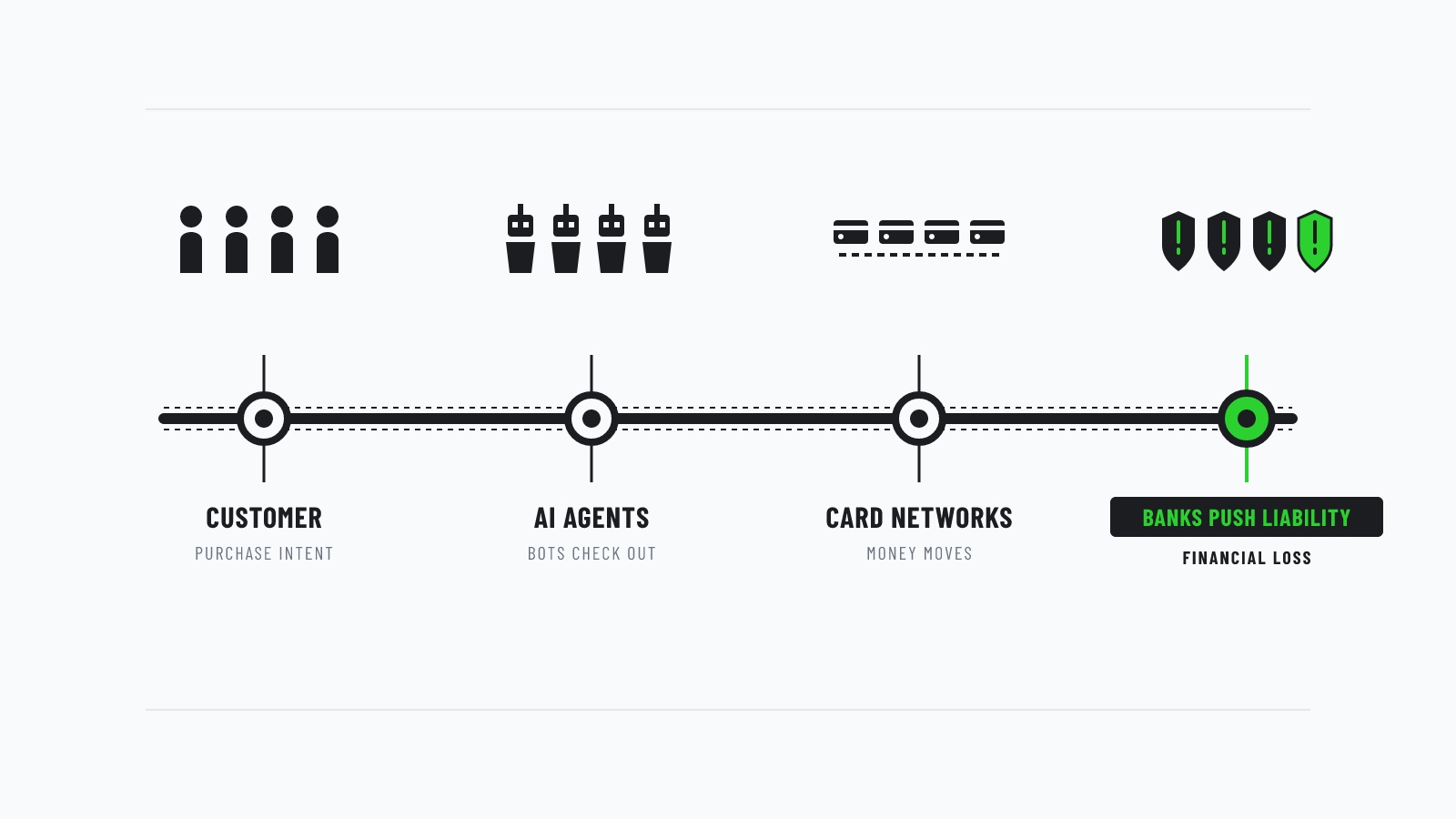
Consumer software agents are now buying products on behalf of shoppers before commercial liability rules are settled. Bank executives and card networks warn that this autonomous commerce is outpacing the legal frameworks designed to protect payments, according to Payments Dive. The central dispute is simple: when an artificial intelligence bot misunderstands an order or buys the wrong item, nobody agrees on who must absorb the financial loss.
The breakdown of traditional card disputes
For decades, consumer card payments have relied on a four-party framework. That model links the cardholder, the issuing bank, the merchant, and the merchant bank, known as the acquirer. Payment networks coordinate these parties. They balance operational risk and compliance through interchange fees and formal dispute mechanisms. When an unauthorized charge or erroneous delivery happens, the customer requests a chargeback, which is a forced reversal of funds from the merchant back to the cardholder.
Autonomous AI shopping tools break this arrangement. Cross River Bank noted that external AI shopping agents operate outside traditional four-party mechanisms. By sitting between the consumer and the checkout page, these software agents neutralize the standard chargeback levers that banks use to assign transaction loss. If a human did not click the final button, proving whether a transaction was authorized becomes difficult.
Early Warning Services, the bank-owned consortium that operates Zelle and the Paze digital wallet, cautioned that statutory law and payment network policies fail to clarify where human authorization boundaries lie during bot purchases. Stripe product lead John Piazza stated that the payments industry currently lacks legal case law to resolve liability when autonomous shopping bots execute transactions.
How money moves when bots check out
The shift toward autonomous retail is accelerating rapidly. Meta Platforms rolled out its personal assistant Muse across the U.S. and Canada in September. Commerce quickly emerged as the primary use case across 10 million early users. In these flows, an individual instructs a digital assistant to find and buy an item within broad parameters, such as a budget limit or a general product description.
The bot then navigates retail websites, populates payment forms, and submits payment details. However, Google payments general manager Stavan Parikh acknowledged that current agent commerce deployments largely bypass standardized card network protocols that remain unreleased. Because standard automated protocols are not yet widely active, bots often mimic human browser sessions. From the perspective of the merchant acquiring bank, the payment appears as a normal card-not-present transaction. The underlying ledger records a clean sale, but the intent behind the purchase originated in a machine model rather than a direct human choice.
Banks push liability to tech firms and cardholders
Because legal precedent is absent, commercial lenders are taking defensive steps to shield their balance sheets. PNC Financial Services Group CEO William Demchak demanded that technology firms absorb direct liability for financial damage caused by software agents operating inside financial systems.
Demchak emphasized the gravity of automated financial execution, stating: "This isn’t like normal technology where you’re allowed to break stuff and figure it out later."
Meanwhile, retail banks are adjusting consumer agreements to prevent absorbing automated errors. Wells Fargo notified account holders in an Oct. 2 email that customers sharing online banking credentials with AI tools may bear personal liability for automated execution errors. If a consumer hands control of their financial login to a bot that makes a purchasing blunder, the bank may treat the resulting settlement as fully authorized by the accountholder.
Emerging network standards and supervision rules
Payment networks and infrastructure providers are racing to build structured rails before rogue purchases trigger widespread losses. Visa developed a trusted agent registry requiring detailed audit logs for automated checkout programs. Mastercard introduced an agent pay standard that uses tokenized payment credentials to restrict bot spending.
American Express established purchase protection terms mandating registered agents. Under those rules, shoppers must submit a formal purchase intent document to dispute erroneous automated orders. Stripe introduced protections for U.S. purchases made through its Link digital wallet, though its user terms require customers to actively supervise agent activities.
Until these proprietary frameworks coalesce into industry-wide standards or court rulings, the financial risk remains fragmented. Merchants risk disputed settlements, banks risk operational friction, and consumers who grant agency to software may find themselves paying for orders they never personally reviewed.
Sources
- Payments Dive, 28 Oct 2026
Written by AI from the sources above and published automatically: before release, a script confirms every figure against the sources and checks for copied text. No editor reviews it. Treat it as background reading, not financial advice.